
Elevation as a Psychological Threshold
The human attraction to elevated landscapes is neither incidental nor purely aesthetic. High places impose a perceptual shift that alters both scale and orientation, reducing the immediacy of everyday concerns while expanding spatial awareness. This effect is particularly evident in mountainous regions, where verticality introduces a clear separation from the density and noise of lowland environments. In Italy, the alpine and subalpine zones provide a distinctive context for this experience, combining dramatic topography with a long-standing cultural relationship to the terrain. The ascent, whether literal or symbolic, functions as a transition into a more reflective mode of perception.
The Italian Alpine Context
Italy’s mountainous geography is defined by the Alps in the north and the Apennines extending through the peninsula, yet it is the alpine arc that most fully embodies the notion of elevation as refuge. The highest peaks in Italy, concentrated along the border regions, establish a landscape of exceptional vertical scale. These summits—formed through complex geological processes—create not only visual landmarks but also climatic and ecological distinctions that shape human habitation. Settlements in these areas are necessarily adapted to conditions of altitude, where isolation and exposure demand resilience while also fostering a particular form of spatial clarity.
Read More : Top 5 Luxury Water Sports to Try in Dubai
Silence, Distance, and Perception
One of the defining characteristics of high-altitude environments is the relative absence of noise. This is not merely an acoustic phenomenon, but a broader condition of reduced sensory interference. In mountainous settings, distance is both visible and palpable; horizons extend, and the built environment recedes in significance. Such conditions recalibrate attention, encouraging observation rather than reaction. The experience of silence at elevation is therefore not emptiness, but a form of perceptual refinement in which minor details—variations in light, shifts in weather, the texture of terrain—acquire greater prominence.
Cervinia and the Architecture of Comfort
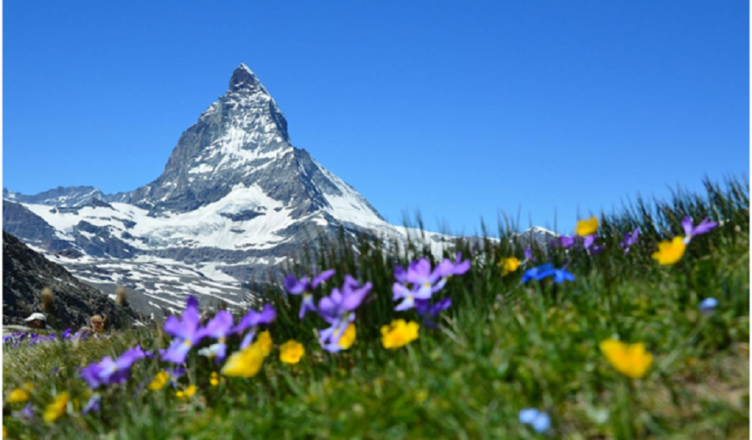
Within this broader alpine framework, certain locations manage to reconcile environmental exposure with a notable degree of comfort. Cervinia, situated at the foot of the Matterhorn, exemplifies this balance. Its position within a high-altitude valley offers direct access to expansive mountain views while maintaining a degree of shelter from more extreme conditions. The built environment reflects a pragmatic adaptation to altitude, yet within it one also finds spaces that emphasize warmth and interiority. An alpine luxury stay in Cervinia is less about display than about the careful calibration of materials, light, and spatial enclosure, creating an atmosphere that contrasts with the surrounding vastness without negating it.
The Appeal of Controlled Isolation
The attraction of places such as Cervinia lies in their capacity to provide a form of controlled isolation. Unlike more remote alpine settlements, which may emphasize austerity, Cervinia allows for withdrawal without deprivation. The visitor is positioned at a remove from urban intensity, yet not entirely detached from systems of access and support. This intermediate condition—neither fully isolated nor fully integrated—supports a particular kind of experience in which distance becomes restorative rather than disorienting. The mountains remain present as a dominant visual and environmental force, but they are mediated through a framework that permits sustained habitation.
Temporal Rhythms at Altitude
High places also impose a distinct temporal structure. Changes in light and weather occur with heightened visibility, and daily cycles become more pronounced. At altitude, the progression from morning clarity to afternoon cloud formation, and eventually to evening stillness, is often experienced with unusual immediacy. This temporal articulation reinforces the sense of separation from lowland rhythms, where artificial lighting and continuous activity tend to obscure such transitions. In alpine settings, time is marked not only by clocks but by environmental cues, contributing to a more measured and attentive mode of living.
Read More : Engineering Aircraft Interiors for Mission Success
Elevation as Recalibration
The enduring appeal of high places can be understood as a response to the conditions of contemporary life, characterized by density, speed, and constant stimulation. Italian mountain environments, particularly within the alpine region, offer a counterpoint defined by openness, silence, and spatial clarity. Locations such as Cervinia demonstrate that this experience need not entail hardship; rather, it can be shaped into a form that combines exposure with comfort. Ultimately, elevation functions as a means of recalibration, allowing perception to adjust and attention to be redistributed in ways that are both subtle and profound.